News and Events
400 Audiences Go Wild for OpenClaw as NVIDIA GTC 2026 Sweeps Campuses
Date 2026-03-20 30 Clicks

The globally renowned AI event NVIDIA GTC 2026 was recently held in San Jose, California. On March 20 at 2:00 PM, Tamkang University’s College of Artificial Innovative Intelligence, College of Engineering, and Office of International and Cross-Strait Affairs jointly hosted the “NVIDIA GTC 2026 Keynote Watch Party” at the Hsu Shou-Chlien International Conference Center, attracting around 400 participants from both on and off campus. Attendees included students from Tamkang and local high schools such as Tamkang Senior High School and Shi-Yu High School, parents, teachers from other institutions, and industry representatives. The audience gathered to watch the keynote by Jensen Huang and follow the latest developments on OpenClaw.
In his opening remarks, Dean Tzung-Hang Lee of the College of Engineering and College of AI Innovation highlighted the university’s active promotion of AI education and industry collaboration in recent years. Partnerships have been established with companies such as Delta Electronics and Microsoft, with over 300 AI-related courses offered to provide both theoretical and practical training. He emphasized that these initiatives enable students to engage with cutting-edge AI technologies, broaden their perspectives, and gain hands-on experience. He added that Tamkang has long been committed to AI-driven educational transformation, encouraging young people eager to grasp AI industry trends to view the university as the starting point for building career competitiveness.
Providing Chinese-language commentary, NVIDIA-certified instructor Feng-Chih Hsu from CAVEDU Education explained that this year’s GTC focused on “Agentic AI,” which is rapidly becoming mainstream. Unlike traditional AI as a supporting tool, Agentic AI can autonomously complete tasks, integrate data, and make decisions. He noted that the development of these technologies will directly impact industrial structures and market dynamics, extending from software to physical systems and real-world applications, including robotics, semiconductors, and data computing. Taiwanese companies are also deeply involved in these areas, highlighting the direction of future industry transformation.
In his keynote, Jensen Huang emphasized that AI is undergoing a fundamental transformation, from perception and generation toward autonomous, task-executing “Agentic AI.” The open-source AI agent platform OpenClaw, humorously nicknamed “lobster,” can not only answer questions but also autonomously perform tasks, make decisions, and take actions with minimal user input. Meanwhile, NVIDIA’s enterprise-grade platform NemoClaw integrates software tools and security mechanisms. As explained by Hsu, it is “like putting the lobster in a box,” enabling AI agents to be safely and scalably deployed in enterprise environments. Huang further described this shift as transformative: “Every carpenter and electrician can become an architect through AI empowerment.” In other words, students must learn how to collaborate with AI—breaking down complex problems and integrating AI into real-world workflows—to enhance their future career competitiveness.
With university entrance exam results recently released, many high school students attended the event. Wei-Hsuan Chen, a senior who has applied to Tamkang’s Department of Japanese, said the concept of Agentic AI impressed her the most, describing it as “having an extra person to help complete tasks.” She noted that she already uses AI to organize application materials, helping her present her strengths more clearly, and expressed excitement about studying at Tamkang. At the same time, she emphasized the importance of maintaining independent thinking when working with AI to ensure accurate judgment and verification of results.
SDGs #SDG04 Quality Education #SDG08 Decent Work and Economic Growth #SDG09 Industry, Innovation and Infrastructure #SDG11 Sustainable Cities and Communities #SDG17 Partnerships for the Goals
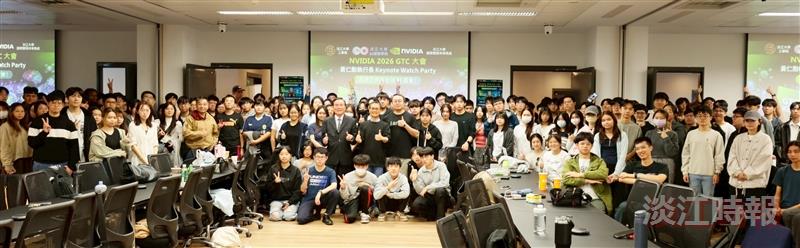
The “NVIDIA GTC 2026 Keynote Watch Party featuring CEO Jensen Huang attracted approximately 400 faculty members and students from both within and outside the university.
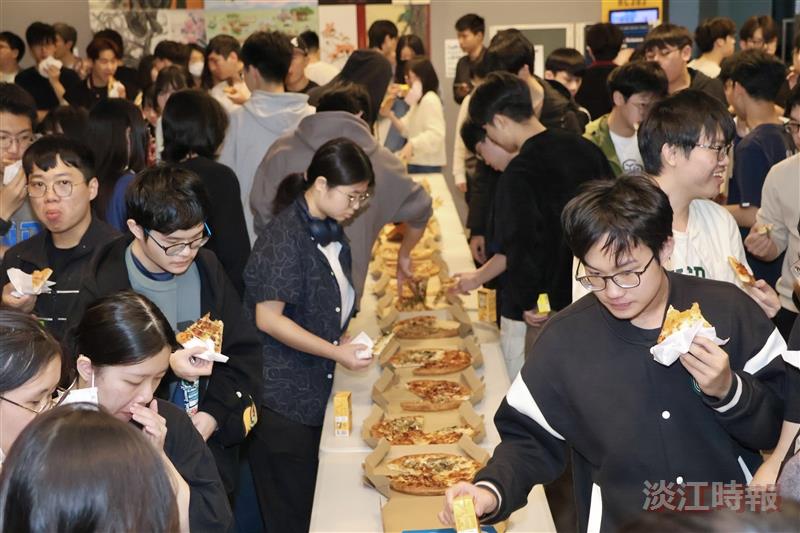
This is not just a feast of knowledge, but also an AI carnival celebration.
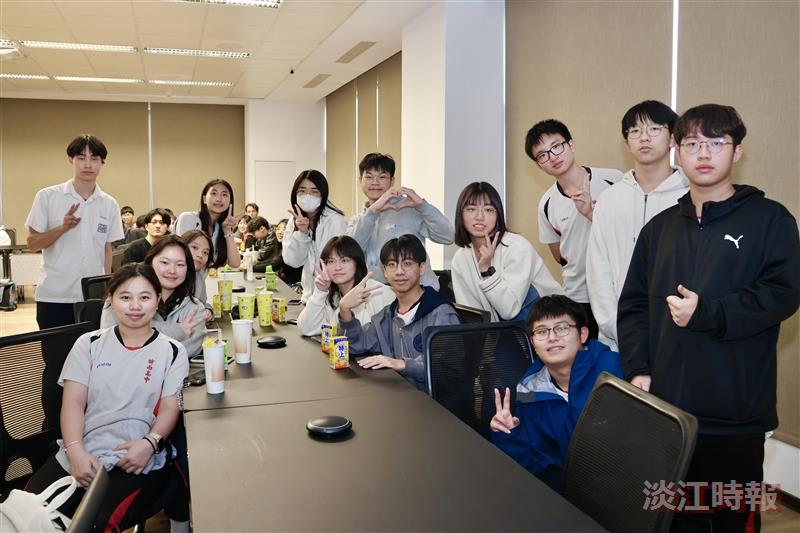
Senior high school students from Shi-Yu High School attended the event in groups, inviting friends to join the occasion.
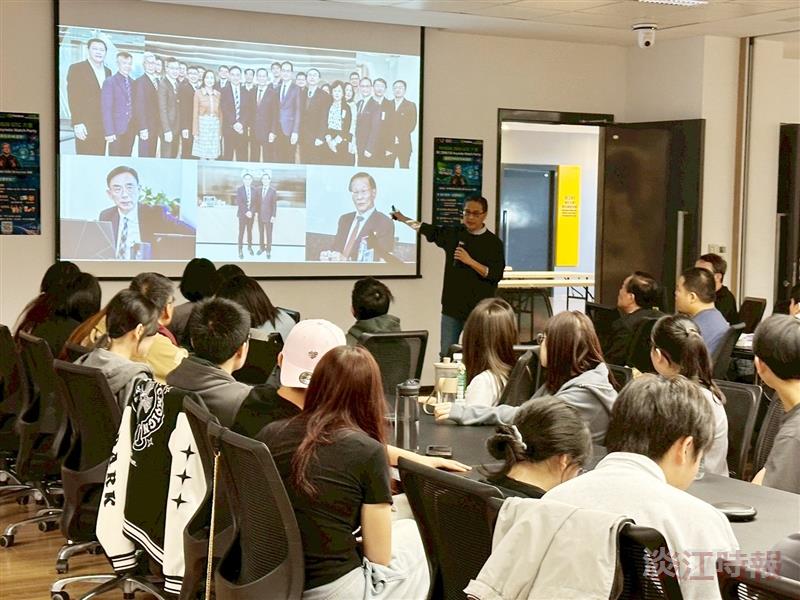
Dean Tzung-Hang Lee of the College of Artificial Innovative Intelligence welcomed high school students, encouraging them to consider Tamkang University as the starting point for building their future career competitiveness.
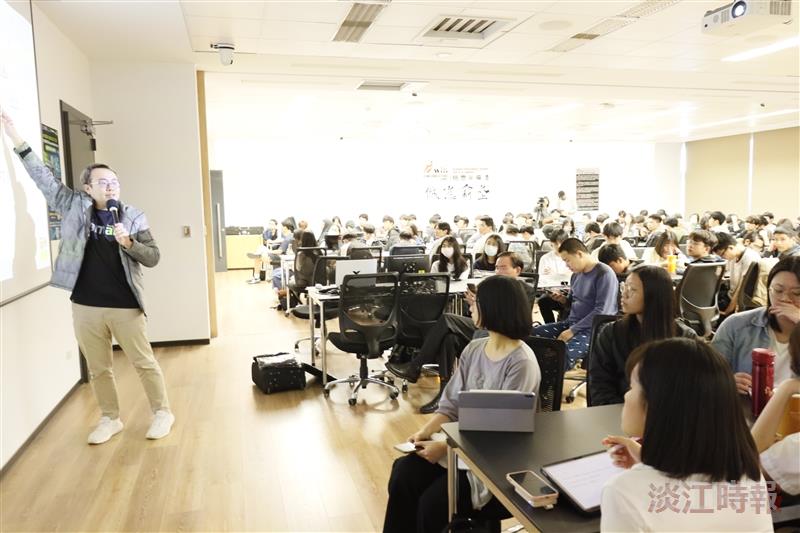
The event featured an expert instructor from the CAVEDU Education, who provided professional commentary to help attendees understand the most cutting-edge AI technologies and applications.
LINKS
- PREV:Spring Feast Amid Blooming Azaleas, Alumni Join Together to Write the University Anthem with Smart e-Pens 2026-03-20
- NEXT:From Specialized Learning to Homestays: U.S. State Department Officials Visit Tamkang to Review Chinese Language Education Results 2026-03-23
- International Student Eco-Culture Expo: 8 Student Clubs Promote Global Sustainability Concepts 2026-03-31
- Total Quality Management Seminar Introduces SROI to Demonstrate Tamkang’s Public Value in Sustainability 2026-03-27
- Tamkang University Signs MOU with Securities and Futures Institute to Jointly Cultivate Green Finance Talent 2026-03-24
- From Specialized Learning to Homestays: U.S. State Department Officials Visit Tamkang to Review Chinese Language Education Results 2026-03-23
- Spring Feast Amid Blooming Azaleas, Alumni Join Together to Write the University Anthem with Smart e-Pens 2026-03-20
- 400 Audiences Go Wild for OpenClaw as NVIDIA GTC 2026 Sweeps Campuses 2026-03-20
- New Taipei’s First Campus Job Fair Delivers Over 3,000 Openings, Achieves Record-High 51.35% Match Rate 2026-03-18
- Alumna’s Fluent Japanese Featured in Japanese Media, TKU Japanese Department Invites Prospective Students to Follow TSMC into Japan 2026-03-16
- College of Education Partners with University of Osaka to Advance Cross-Border Collaboration on Futures Research and Social Innovation 2026-03-12
- President Keh Leads Delegation to Visit AMD, Aiming to Deepen Industry–Academia Collaboration and Cultivate Interdisciplinary AI Talent 2026-03-11