News and Events
Total Quality Management Seminar Introduces SROI to Demonstrate Tamkang’s Public Value in Sustainability
Date 2026-03-27 32 Clicks

The Office of Quality Assurance and Audit held the “2025 Academic Year Total Quality Management (TQM) Seminar” at 9:00 AM on March 27 at the Hsu Shou-Chlien International Conference Center. Under the theme “From Continuous Improvement to Public Value: Internalizing Quality and Externalizing Impact in University Governance,” the event was attended by President Huan-Chao Keh, Chairperson Flora Chia-I Chang, three vice presidents, first- and second-level supervisors, and over 300 faculty and staff. During the event, President Keh presented awards for the 14th Quality Control Circle (QCC) Competition: first place to the General Affairs Office team “Always in Service” (「總是在服務圈」), second place to the Information Services Office team “Firefighting Circle” (「救火圈」), and third place to the Finance Office team “Kuai-Kuai Circle” (「會快圈」).
In her remarks, Chairperson Chang emphasized that since 1993, Tamkang University has consistently promoted TQM, making it a core element of institutional development. She went on to reference the 2026 Risk Report of the World Economic Forum, noting that the coming decade will be shaped by challenges in geopolitics, AI technologies, and sustainable development. She emphasized the need to transform external risks into internal drivers of governance, and encouraged colleagues to adopt the Social Return on Investment (SROI) evaluation tool introduced in this workshop. By integrating it with the PDCA cycle and AI technologies, she called for strengthening “continuous improvement” and “process management,” effectively embedding these approaches into university development plans to maximize social value and impact.
President Keh reiterated that “TQM is the cornerstone of university governance.” He noted that since 2023, Tamkang University has incorporated AI and sustainability into TQM, advancing toward TQM 2.0 (Smart and Sustainable TQM), shifting governance from continuous improvement to value co-creation. He emphasized that SROI enables the scientific quantification of intangible public value and social impact, making it a key tool for evaluating institutional performance and transforming internal quality improvements into externally impactful governance.
The first keynote was delivered by President Cheng-Yuan Chen of China University of Technology, titled “The Deepening, Internalization, and Evolution of TQM in the AI Era.” He provided an in-depth analysis of the compounded challenges posed by generative AI and declining birthrates in higher education. He noted that Tamkang University has a strong foundation in quality culture and has previously received the National Quality Award. In response to future challenges, he suggested that TQM should evolve from being merely “stable” to becoming “precise, fast, and impactful.” He proposed three strategic directions: first, “deepening” data-driven governance to enhance real-time decision-making; second, “internalizing” administrative streamlining and cultural transformation through the use of AI assistants to reduce workload; and third, “evolving” by integrating AI into the vision of higher education, transforming traditional strengths into new-stage competitiveness.
The second keynote was delivered by CEO Chia-Yen Yang of Canopi Impact Investment, titled “From SROI to Goal-Oriented University Governance.” He shared how SROI can help organizations measure comprehensive value. He began by outlining the six key steps and eight core principles of SROI implementation, emphasizing that university governance should start from stakeholder engagement. Through data quantification and monetization, institutions can accurately present the outcomes and impact of educational efforts. He further noted that SROI is not only an evaluation tool but can also be extended to Objectives and Key Results (OKR) management. This enables universities to achieve precise value communication and resource allocation while reducing administrative burden, transforming intangible social impact into tangible outcomes, and ultimately enhancing governance effectiveness and institutional branding.
The Q&A session was moderated by President Keh. Associate Professor Hsiao-Wen Hung, Chief of the Resilient Governance Planning Section of the Center for Sustainable Development and Social Innovation, along with President Cheng-Yuan Chen, raised questions on stakeholder impact assessment and the valuation of monetization in SROI, which were addressed by Chia-Yen Yang. In his closing remarks, President Keh reiterated the four key initiatives under the “All-Cloud Smart Campus 3.0”: AI-driven cloud governance, digital twin energy management, AI-led teaching innovation, and smart, sustainable industry–academia collaboration. He emphasized that by leveraging the combined impact of ESG and AI, Tamkang University will integrate institutional development plans and sustainability reports with SROI tools, transforming Tamkang’s existing strengths into future competitiveness.
Chairperson Chang reminded attendees that although undergraduate daytime program enrollment rates have exceeded 100% for two consecutive years, department chairs and faculty must continue to monitor student retention and support students in their academic progress at Tamkang University. She also emphasized that administrative units should make effective use of AI to streamline processes and improve efficiency. She concluded by stressing that the essence of TQM lies in implementing the PDCA cycle, particularly the “Check” stage, and expressed hope that colleagues will integrate AI and SROI tools in the future to strengthen data-driven and transparent university governance.
SDGs #SDG04 Quality Education #SDG09 Industry, Innovation and Infrastructure #SDG11 Sustainable Cities and Communities #SDG17 Partnerships for the Goals
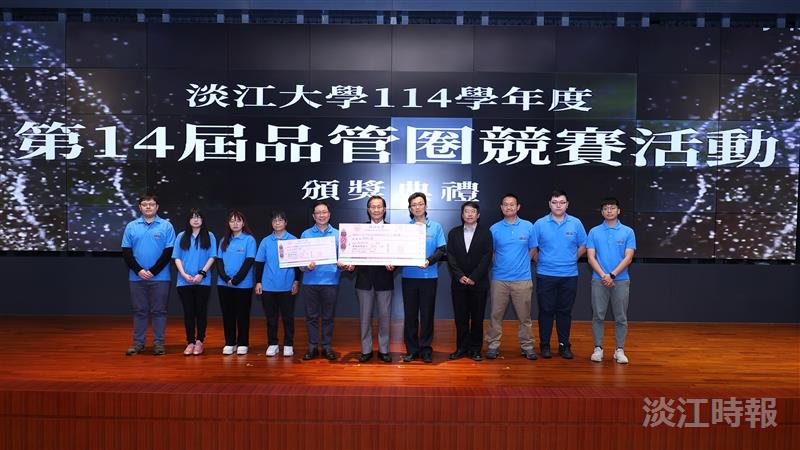
President Huan-Chao Keh (right 6th) presented the award to the second-place winner of the 14th QCC Competition, the Information Services Office team “Firefighting Circle” (「救火圈」).
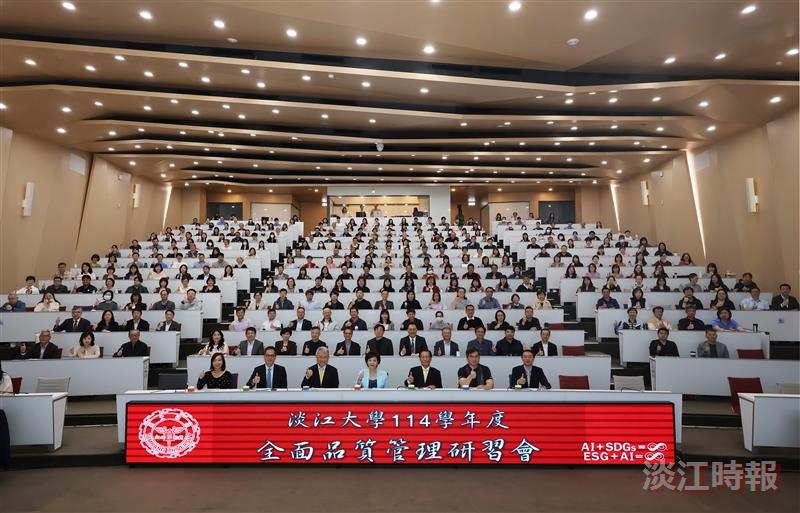
The 2025 Academic Year Total Quality Management Seminar was held at the Chang Yeo Lan Hall of the Hsu Shou-Chlien International Conference Center at Tamkang University, under the theme “From Continuous Improvement to Public Value: Internalizing Quality and Externalizing Impact in University Governance.”
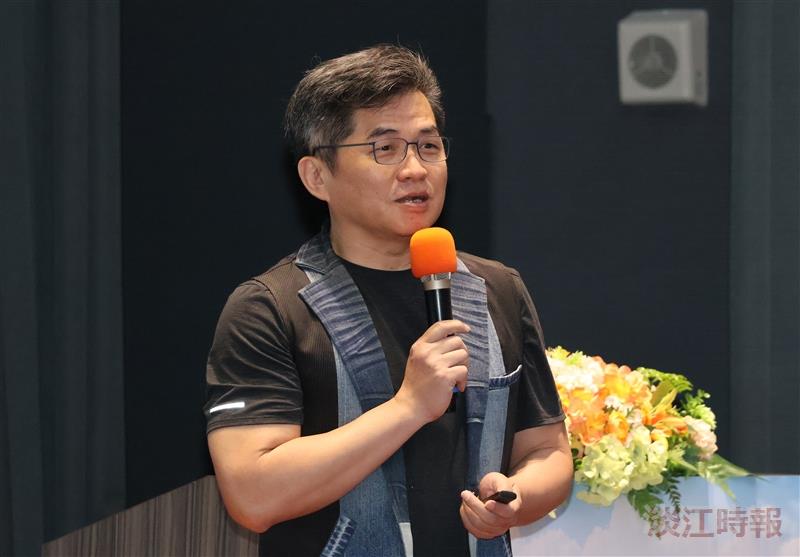
CEO Chia-Yen Yang of Canopi Impact Investment shared how SROI (Social Return on Investment) can help organizations measure comprehensive value.
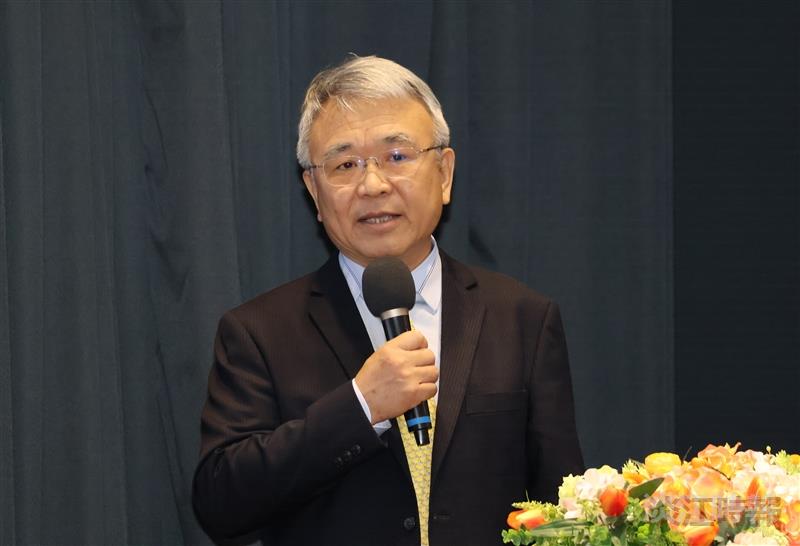
President Cheng-Yuan Chen of China University of Technology provided an in-depth analysis of the complex challenges that generative AI and declining birthrates pose to higher education.
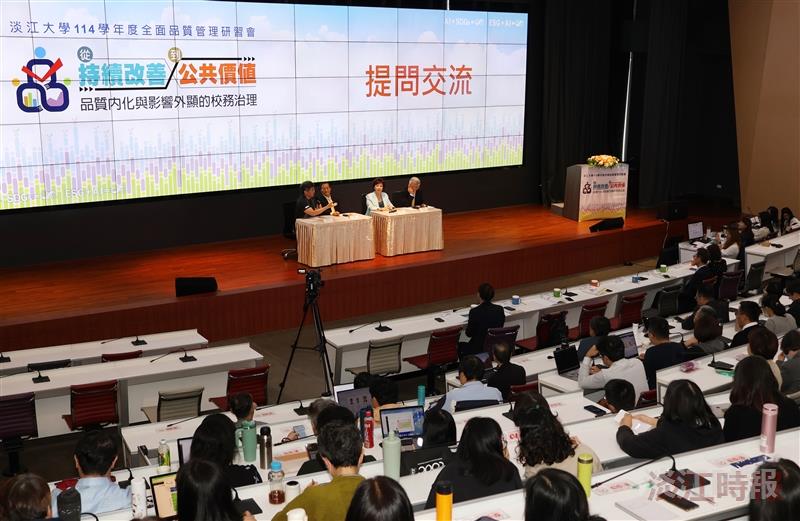
During the Q&A session, Chia-Yen Yang (left 1st on stage) responded to questions raised by participants.
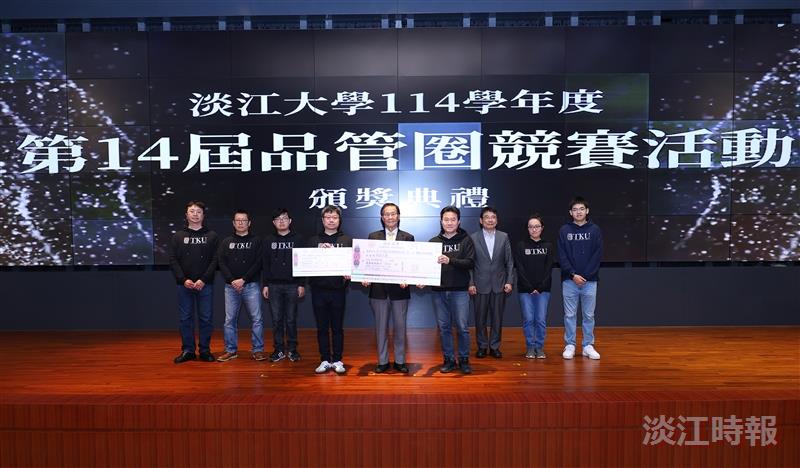
President Huan-Chao Keh (left 5th from right) presented the award to the first-place winner of the 14th QCC Competition, the General Affairs Office team “Always in Service” (「總是在服務圈」).
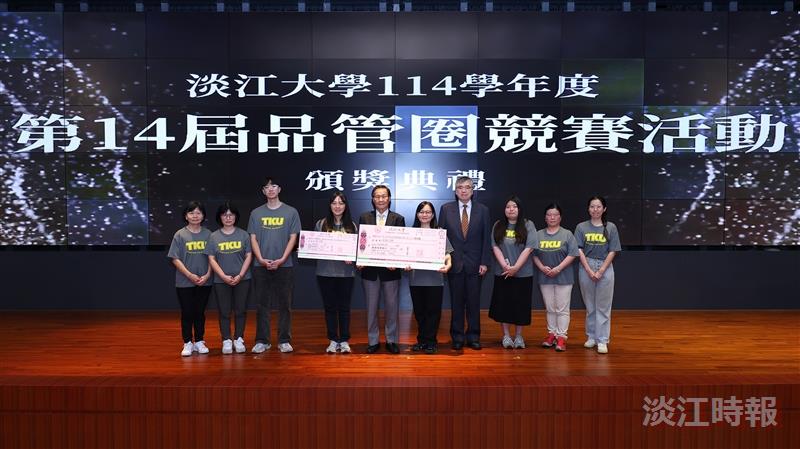
President Huan-Chao Keh (right 6th) presented the award to the third-place winner of the 14th QCC Competition, the Finance Office team “Kuai-Kuai Circle” (「會快圈」).
LINKS
- PREV:Tamkang University Signs MOU with Securities and Futures Institute to Jointly Cultivate Green Finance Talent 2026-03-24
- NEXT:International Student Eco-Culture Expo: 8 Student Clubs Promote Global Sustainability Concepts 2026-03-31
- International Student Eco-Culture Expo: 8 Student Clubs Promote Global Sustainability Concepts 2026-03-31
- Total Quality Management Seminar Introduces SROI to Demonstrate Tamkang’s Public Value in Sustainability 2026-03-27
- Tamkang University Signs MOU with Securities and Futures Institute to Jointly Cultivate Green Finance Talent 2026-03-24
- From Specialized Learning to Homestays: U.S. State Department Officials Visit Tamkang to Review Chinese Language Education Results 2026-03-23
- Spring Feast Amid Blooming Azaleas, Alumni Join Together to Write the University Anthem with Smart e-Pens 2026-03-20
- 400 Audiences Go Wild for OpenClaw as NVIDIA GTC 2026 Sweeps Campuses 2026-03-20
- New Taipei’s First Campus Job Fair Delivers Over 3,000 Openings, Achieves Record-High 51.35% Match Rate 2026-03-18
- Alumna’s Fluent Japanese Featured in Japanese Media, TKU Japanese Department Invites Prospective Students to Follow TSMC into Japan 2026-03-16
- College of Education Partners with University of Osaka to Advance Cross-Border Collaboration on Futures Research and Social Innovation 2026-03-12
- President Keh Leads Delegation to Visit AMD, Aiming to Deepen Industry–Academia Collaboration and Cultivate Interdisciplinary AI Talent 2026-03-11