News and Events
Tamkang University Deepens Industry–Academia Partnership with AMD, Focusing on AI Curriculum, Robotics, and Campus Computing Infrastructure
Date 2026-04-17 27 Clicks

Following President Huan-Chao Keh's recent visit to AMD Taiwan, both sides held an in-depth working-level meeting on April 15 and reached a consensus on future collaboration. AMD will support Tamkang University through its “AMD University Program (AUP),” providing cloud computing resources, AI PC equipment, and teaching materials to assist faculty in designing progressive learning pathways covering machine learning, natural language processing, and generative AI. Initial priorities include AI curriculum module design, campus computing infrastructure planning, and mechanisms for joint projects, with designated teams tasked with following up on implementation details and jointly advancing AI-driven educational innovation.
On the same day, AMD’s delegation, led by Senior Vice President of Commercial Business Jeffrey Huang and including AUP Technical Consultant Hsu-Yu Chang, Commercial Business Manager Yen-Ming Ho, and FAE/Field Support Manager Wen-Tang Lee, visited the university. They met with Dean Tzung-Hang Lee of the College of Engineering, the College of Artificial Innovative Intelligence, and the College of Precision Healthcare, Dean of Academic Affairs Tzong-Ru Tsai, Chief Information Officer Kuei-Ping Shih, Director Shu-Han Liao of the Champion Incubation and Industry Collaboration Center, Director Chih-Hung Chung of the Center Distance Education Development, and faculty representatives including Professor Peter Liu (Chair, Department of Electrical and Computer Engineering), Professor Ching-Chang Wong, Shih-Hsin Chen (Chair, Department of Computer Science and Information Engineering), and Kuo-Chung Yu (Chair, Department of AI).
During the meeting, Hsu-Yu Chang introduced the AUP, noting that it offers diverse resources such as cloud computing power, AI PCs, and instructional materials to reduce the burden on faculty when adapting curricula. Both sides expressed strong optimism about the partnership and discussed a flexible, phased implementation approach. Courses will be tailored to institutional needs, covering topics from machine learning and deep learning to natural language processing and generative AI, forming a comprehensive and scalable AI learning pathway.
Dean Tzung-Hang Lee emphasized Tamkang’s ongoing efforts to strengthen ties with industry in curriculum development, expressing hope that this collaboration will enable students to access world-class AI core technologies during their studies. He noted that the College of Engineering and the College of Artificial Innovative Intelligence possess strong faculty expertise and research capacity, making them key partners for AMD in advancing Taiwan’s industry–academia ecosystem. Existing programs already provide foundational coursework, and further integration with AMD resources is expected to enhance students’ hands-on capabilities, particularly in large language model applications.
In the areas of robotics and hardware development, both sides discussed the use of AMD development kits in teaching. AMD indicated that faculty may apply for free trial equipment for classroom use, and that existing courses such as logic circuits and digital design can be readily integrated with AMD platforms, lowering adoption barriers. Faculty participants widely agreed that robotics serves as an ideal platform for AI applications, and expressed interest in building a comprehensive curriculum spanning from FPGA to SoC development.
The meeting also addressed the establishment of on-campus computing infrastructure. AMD’s local computing capabilities can support large language models, and when combined with open-source software frameworks, enable universities to build autonomous and secure AI inference environments. This approach can significantly reduce reliance on commercial cloud services while enhancing data security. CIO Shih noted that Tamkang University will evaluate the feasibility of these solutions and consider incorporating them into its overall IT planning.
SDGs #SDG04 Quality Education #SDG08 Decent Work and Economic Growth #SDG09 Industry, Innovation and Infrastructure #SDG17 Partnerships for the Goals
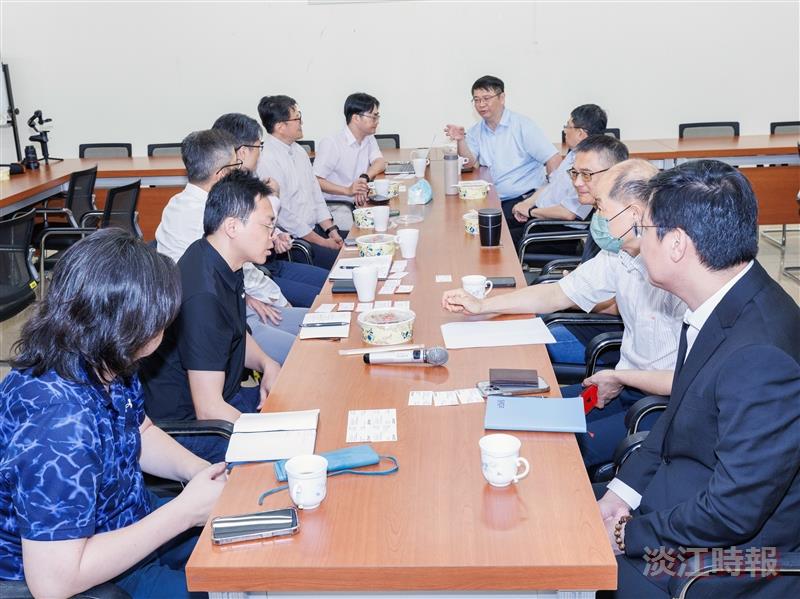
Participants engaged in in-depth discussions on a range of topics, including collaboration on AI curriculum development and joint industry–academia research.
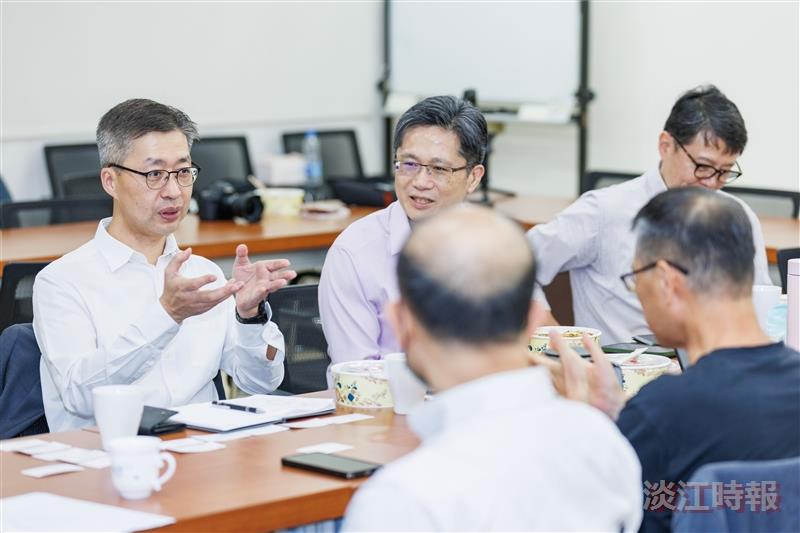
Senior Vice President of Commercial Business at AMD, Jeffrey Huang (left), and his delegation met with TKU representatives to discuss details of the collaboration.
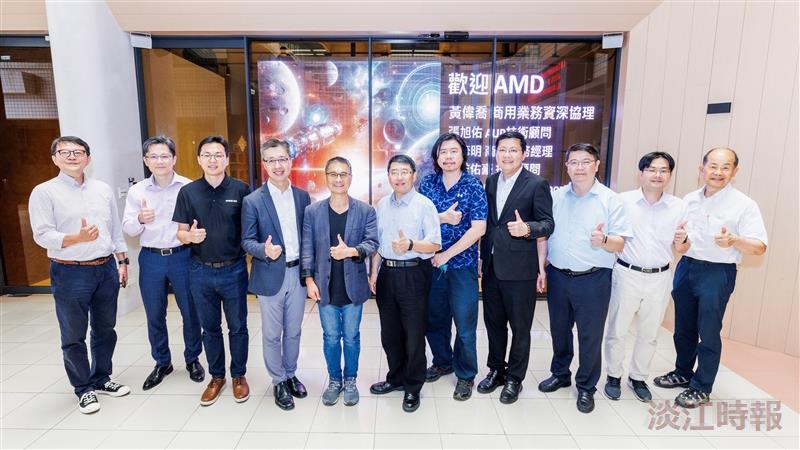
The AMD team visited the campus to discuss future industry–academia collaboration projects.
LINKS
- PREV:AI–Sustainability Dual Governance: President Huan-Chao Keh Wins CommonWealth Magazine Outstanding Performance Award in Peer Evaluation 2026-04-15
- NEXT:Physics Faculty and Students Achieve Breakthrough Surge in Research Output, with Publications in Leading International Journals 2026-04-20
- Scholars from 14 Countries Gather at ICEIB 2026 at Tamkang University to Explore Key Opportunities in the AI Wave 2026-04-27
- Physics Faculty and Students Achieve Breakthrough Surge in Research Output, with Publications in Leading International Journals 2026-04-20
- USR Banquet Program Launches “Huwei Feast 1002”: Press Event Tells History Through Cuisine 2026-04-20
- From Professional Support to Witnessing the Completion of the Danjiang Bridge, Tamkang University Demonstrates the Value of a Locally Engaged Institution 2026-04-20
- Tamkang University Deepens Industry–Academia Partnership with AMD, Focusing on AI Curriculum, Robotics, and Campus Computing Infrastructure 2026-04-17
- President Keh Boosts Morale at National Intercollegiate Athletic Games Flag Presentation, Soft Tennis Team Secures 3 Silvers in Early Victory 2026-04-15
- AI–Sustainability Dual Governance: President Huan-Chao Keh Wins CommonWealth Magazine Outstanding Performance Award in Peer Evaluation 2026-04-15
- Science Outreach Travels 3,000 Km Overseas: “Chemistry On The Go” Officially Launches in Malaysia 2026-04-09
- Honors Program ‘Sustainable Design and Innovation’ Guides Students in Social Practice, Wins Global Views USR Award 2026-04-09
- International Student Eco-Culture Expo: 8 Student Clubs Promote Global Sustainability Concepts 2026-03-31